I recently put together a very short video to highlight how a small shift in consumer spending could really make a positive impact on our communities. Please feel free to watch it here https://www.facebook.com/share/r/1B3wg1dXmH/
The Wellington region is at a real crossroads. More and more of our household spending is drifting offshore. Stats NZ reports that Kiwi households collectively spent $1.238 billion on low‑value imported goods in the year to September 2024, an average of $1,700 a year per household — and that money disappears from our region the moment we click “buy now.” It doesn’t support local wages, local services, or the small businesses that make our towns feel like home.
What happens to the heart of our cities when too much spending leaves?
As a retail store owner, I connect with many hospitality and retail businesses around our region and receive feedback about the impact of our current challenging economy, as well as the change in spending habits. Many are having to make difficult decisions about whether they can continue to trade as they battle through adverse conditions.
Where we spend, and what we spend on, can have such an impact if we choose to be mindful and make decisions that go further than the actual sale - by selecting quality, locally made products we are reducing waste, being gentler to the planet, strengthening our communities, encouraging and supporting our artists, creators and artisans - all while enjoying in-person connections and experiences.
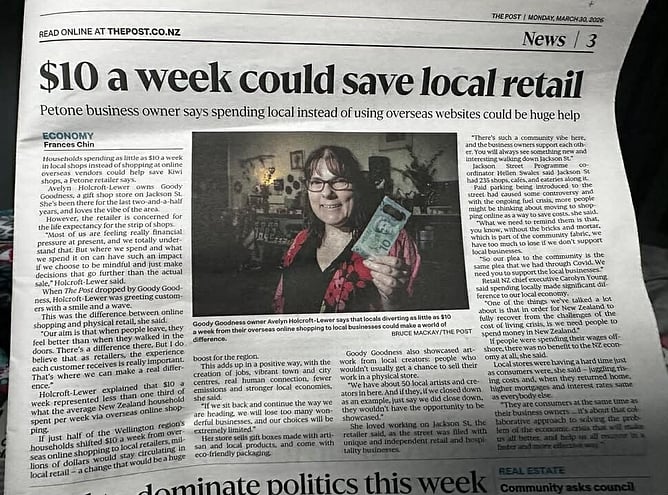
If just half of Wellington region's households shifted $10 a week from overseas online shopping to local retailers, more than $50 million a year would stay circulating here. That change would be a huge boost for the region - and it is a tangible way we can actually make a difference. Every conscious decision to redirect overseas spending to local businesses adds up in a positive way. Please note that we are not saying you need to find another $10 per week, or $520 per year, it is about redirecting what is currently being spent.
Local spending keeps money moving through local wages and services.
Busy, lived‑in town centres feel safer and are more welcoming, encouraging people to visit, explore and spend.
Shorter supply chains mean less exposure to global shocks like fuel spikes or shipping delays.
Local shops give people real human contact at a time when loneliness is rising.
Regions with strong local economies bounce back faster from downturns.
A small shift in how we spend can make a big difference in how our communities feel. This is about deciding what kind of region we want to live in — and whether we want our town centres to stay places of connection, creativity, and belonging, or become empty spaces we wish we’d supported while they were still here. In a world where we can feel that so much is outside of our control, this is one way we can create real positive change.
How you can help
As well as spending locally, here are some other ways you can help spread the word.
share posts on social media about where you have spent locally and add hashtag #redirectyourspendnz to spread awareness
share local business posts so they reach a new audience
talk to friends and family about redirecting their spend. Explain the concept and how it can benefit our communitie